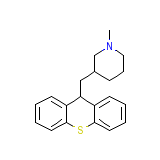
Mepiosine


Mepiosine Brand names, Mepiosine Analogs
- 3P bamate
- Amepromat
- Amosene
- Anastress
- Anathylmon
- Anatimon
- Andaksin
- Andaxin
- Aneural
- Aneurol
- Aneusral
- Aneuxal
- Aneuxral
- Ansiatan
- Ansietan
- Ansil
- Ansiowas
- Anural
- Anxietil
- Anzil
- Apascil
- Apasil
- Apo-Meprobamate
- Appetrol
- Appetrol-Sr
- Arcoban
- Arpon
- Artolon
- Ataraxine
- Atraxin
- Auxietil
- Ayeramate
- Ayermate
- Bamate
- Bamd 400
- Bamo 400
- Biobamat
- Biobamate
- Brobamate
- Calmadin
- Calmax
- Calmiren
- Canquil 400
- Canquil-400
- Carbaxin
- Cirpon
- Cirponyl
- Coprobate
- Crestanil
- Cypron
- Cyrpon
- DEA No. 2820
- Dapaz
- Deprol
- Despasmol
- Dicandiol
- Diron
- Diurnal
- Diurnaldiverondormabrol
- Diveron
- Dormabrol
- Ecuanil
- Edenal
- Enorden
- Epicur
- Epikur
- Equagesic
- Equanil
- Equanil suspension
- Equatrate
- Equazine-M
- Equilium
- Equinil
- Equitar
- Erina
- Estasil
- Fas-Cile
- Fas-Cile 200
- Gadexyl
- Gagexyl
- Harmonin
- Hartol
- Holbamate
- Ipsotian
- Kesso-Bamate
- Kessobamate
- Klort
- Larten
- Lepenil
- Lepetown
- Letyl
- Libiolan
- Madiol
- Mar-Bate
- Margonil
- Mendel
- Mepamtin
- Mepantin
- Mepavlon
- Mepiosine
- Meposed
- Mepranil
- Mepriam
- Meprin
- Meprindon
- Mepro-Aspirin
- Mepro-analgesic
- Meprobam
- Meprobamat
- Meprobamat [German]
- Meprobamate [USAN:BAN:INN:JAN]
- Meprobamate and Aspirin Tablets
- Meprobamato
- Meprobamato [INN-Spanish]
- Meprobamato [Italian]
- Meprobamatum [INN-Latin]
- Meproban
- Meprocompren
- Meprocon
- Meprocon CMC
- Meprodil
- Meprodiol
- Meprol
- Meproleaf
- Mepron
- Mepronil
- Meprosa
- Meprosan
- Meprosin
- Meprospan
- Meprospan 200
- Meprospan 400
- Meprospan-200
- Meprospan-400
- Meprotabs
- Meprotan
- Meprotanum
- Meproten
- Meprotil
- Meprovan
- Meprovanmeprozine
- Meprozine
- Meptran
- Meptranactylmilprem
- Mesmar
- Metractyl
- Metranquil
- Micrainin
- Milpath
- Milprem
- Milprem-200
- Milprem-400
- Miltamato
- Miltann
- Miltaun
- Miltown
- Miltown 600
- Miltown-200
- Miltown-400
- Miltown-600
- Miltrate
- Miltuan
- Miltwon
- Misedant
- Morbam
- Multaun
- My-trans
- Neo-Tran
- Nephentine
- Nervonus
- Neuramate
- Oasil
- Optarket
- Orlevol
- Orolevol
- Pan-tranquil
- Pancalma
- Panediol
- Pankalma
- Pathibamate
- Paxin
- Pensive
- Perequietil
- Perequil
- Perquietil
- Pertranquil
- Pimal
- Placidon
- Placitate
- Prequil
- Probamato
- Probamyl
- Probate
- Procalmadiol
- Procalmadol
- Procalmidol
- Procarbamide
- Promate
- Promato
- Proquanil
- Protran
- Q-Gesic
- Quaname
- Quanane
- Quanil
- Quietidon
- Quivet
- Rastenil
- Reostral
- Restenil
- Restenyl
- Restinal
- Restinil
- Restran
- Robamate
- SK-Bamate
- Sadanyl
- Scolazil
- Sedabamate
- Sedanil
- Sedanyl
- Sedazil
- Sedoquil
- Sedoselecta
- Selene
- Seril
- Setran
- Shalvaton
- Solevione anastress
- Sowell
- Spantran
- Stensolo
- Tamate
- Tensol
- Tensonal
- Trancot
- Trankvilan
- Tranlisant
- Tranmep
- Tranquil
- Tranquilan
- Tranquilate
- Tranquilax
- Tranquiline
- Tranquillin
- Tranquilsan
- Tranquinol
- Tranquisan
- Trelmar
- Urbil
- Urbilat
- Vio-Bamate
- Vistabamate
- Wardamate
- Wyseals
- Zirpon
Mepiosine Brand Names Mixture
- No information avaliable
Mepiosine Chemical_Formula
C20H23NS
Mepiosine RX_link
No information avaliable
Mepiosine fda sheet
Mepiosine msds (material safety sheet)
Mepiosine Synthesis Reference
No information avaliable
Mepiosine Molecular Weight
309.469 g/mol
Mepiosine Melting Point
< 25 oC
Mepiosine H2O Solubility
Soluble as HCl salt
Mepiosine State
Liquid
Mepiosine LogP
5.7
Mepiosine Dosage Forms
Tablets (oral, 1 mg)
Mepiosine Indication
Used for the symptomatic treatment of parkinsonism.
Mepiosine Pharmacology
Metixene is a tertiary antimuscarinic with actions similar to those of atropine; it also has antihistaminic and direct antispasmodic properties. It is used for the symptomatic treatment of parkinsonism, including the alleviation of the extrapyramidal syndrome induced by other drugs such as phenothiazines, but, like other antimuscarinics, it is of no value against tardive dyskinesias. Metixene has been discontinued.
Mepiosine Absorption
Absorbed in the gastrointestinal tract following oral administration, however the extent of absorption is not known.
Mepiosine side effects and Toxicity
Signs of overdose include dilated and sluggish pupils, warm, dry skin, facial flushing, decreased secretions of the mouth, pharynx, nose, and bronchi, foul-smelling breath, elevated temperature, tachycardia, cardiac arrhythmias, decreased bowel sounds, urinary retention, delirium, disorientation, anxiety, hallucinations, illusions, confusion, incoherence, agitation, hyperactivity, ataxia, loss of memory, paranoia, combativeness, and seizures.
Mepiosine Patient Information
Mepiosine Organisms Affected
Humans and other mammals