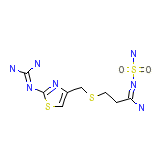
Famocid


Famocid Brand names, Famocid Analogs
- Amfamox
- Antodine
- Apo-Famotidine
- Apogastine
- Bestidine
- Blocacid
- Brolin
- Cepal
- Confobos
- Cronol
- Cuantin
- Dibrit 40
- Digervin
- Dinul
- Dipsin
- Dispromil
- Dispronil
- Duovel
- Durater
- Evatin
- Fadin
- Fadine
- Fadyn
- Fagastine
- Famo
- Famocid
- Famodar
- Famodil
- Famodin
- Famodine
- Famogard
- Famonit
- Famopsin
- Famos
- Famosan
- Famotal
- Famotep
- Famotidina [Spanish]
- Famotidinum [Latin]
- Famotin
- Famovane
- Famowal
- Famox
- Famoxal
- Famtac
- Famulcer
- Fanobel
- Fanosin
- Fanox
- Farmotex
- Ferotine
- Fibonel
- Fluxid
- Fudone
- Ganor
- Gaster
- Gastridan
- Gastridin
- Gastrion
- Gastro
- Gastrodomina
- Gastrofam
- Gastropen
- Gastrosidin
- H2 Bloc
- Hacip
- Huberdina
- Ingastri
- Invigan
- Lecedil
- Logos
- Mensoma
- Midefam
- Mosul
- Motiax
- Muclox
- Mylanta AR
- Neocidine
- Nevofam
- Notidin
- Novo-Famotidine
- Nu-Famotidine
- Nulceran
- Nulcerin
- Panalba
- Pepcid
- Pepcid AC
- Pepcid Ac (geltab)
- Pepcid RPD
- Pepcidin
- Pepcidin Rapitab
- Pepcidina
- Pepcidine
- Pepdif
- Pepdine
- Pepdul
- Pepfamin
- Peptan
- Peptidin
- Peptifam
- Pepzan
- Purifam
- Quamatel
- Quamtel
- Renapepsa
- Restadin
- Rogasti
- Rubacina
- Sedanium-R
- Sigafam
- Supertidine
- Tairal
- Tamin
- Tipodex
- Topcid
- Ulcatif
- Ulceprax
- Ulcofam
- Ulfagel
- Ulfam
- Ulfamid
- Ulfinol
- Ulgarine
- Vagostal
- Weimok
- Whitidin
- Yamarin
Famocid Brand Names Mixture
- No information avaliable
Famocid Chemical_Formula
C8H15N7O2S3
Famocid RX_link
http://www.rxlist.com/cgi/generic/famot.htm
Famocid fda sheet
Famocid msds (material safety sheet)
Famocid Synthesis Reference
H. Yasufumi et al.; U.S. Pat. 4,283,408 (1981)
Famocid Molecular Weight
337.449 g/mol
Famocid Melting Point
163-164 oC
Famocid H2O Solubility
1.1 mg/mL
Famocid State
Solid
Famocid LogP
-0.726
Famocid Dosage Forms
Oral tablets; Rapid disintergrating tablets; Suspension; Injectable solution
Famocid Indication
For the treatment of peptic ulcer disease (PUD) and gastroesophageal reflux disease (GERD).
Famocid Pharmacology
Famotidine, a competitive histamine H2-receptor antagonist, is used to treat gastrointestinal disorders such as gastric or duodenal ulcer, gastroesophageal reflux disease, and pathological hypersecretory conditions. Famotidine inhibits many of the isoenzymes of the hepatic CYP450 enzyme system. Other actions of Famotidine include an increase in gastric bacterial flora such as nitrate-reducing organisms.
Famocid Absorption
The bioavailability of oral doses is 40-45%.
Famocid side effects and Toxicity
Intravenous, mouse: LD50 = 244.4mg/kg; Oral, mouse: LD50 = 4686 mg/kg. Symptoms of overdose include emesis, restlessness, pallor of mucous membranes or redness of mouth and ears, hypotension, tachycardia and collapse.
Famocid Patient Information
Famotidine is used to treat stomach and duodenal (upper small intestine) ulcers;
hypersecretory (increased acid secretion) conditions; heartburn and gastroesophageal
reflux disease (stomach contents bubbling into the esophagus causing pain). Notify your
physician if you are pregnant or nursing. Famotidine may be taken with or without food.
Shake the oral suspension vigorously for 5-10 seconds before taking. Unused oral
suspension should be discarded after 30 days. Notify your physician if you develop black,
tarry stools or coffee-ground vomit.
hypersecretory (increased acid secretion) conditions; heartburn and gastroesophageal
reflux disease (stomach contents bubbling into the esophagus causing pain). Notify your
physician if you are pregnant or nursing. Famotidine may be taken with or without food.
Shake the oral suspension vigorously for 5-10 seconds before taking. Unused oral
suspension should be discarded after 30 days. Notify your physician if you develop black,
tarry stools or coffee-ground vomit.
Famocid Organisms Affected
Humans and other mammals