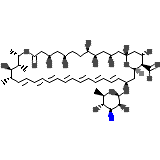
HSDB 3008 IAB


HSDB 3008 IAB Brand names, HSDB 3008 IAB Analogs
HSDB 3008 IAB Brand Names Mixture
- No information avaliable
HSDB 3008 IAB Chemical_Formula
C47H73NO17
HSDB 3008 IAB RX_link
http://www.rxlist.com/cgi/generic2/amphoter.htm
HSDB 3008 IAB fda sheet
HSDB 3008 IAB msds (material safety sheet)
HSDB 3008 IAB Synthesis Reference
No information avaliable
HSDB 3008 IAB Molecular Weight
924.079 g/mol
HSDB 3008 IAB Melting Point
170.0 oC
HSDB 3008 IAB H2O Solubility
750 mg/L
HSDB 3008 IAB State
Solid
HSDB 3008 IAB LogP
0.947
HSDB 3008 IAB Dosage Forms
Slow intravenous-infusion
HSDB 3008 IAB Indication
Used to treat potentially life threatening fungal infections.
HSDB 3008 IAB Pharmacology
Amphotericin B shows a high order of in vitro activity against many species of fungi. Histoplasma capsulatum, Coccidioides immitis, Candida species, Blastomyces dermatitidis, Rhodotorula, Cryptococcus neoformans, Sporothrix schenckii, Mucor mucedo, and Aspergillus fumigatus are all inhibited by concentrations of amphotericin B ranging from 0.03 to 1.0 mcg/mL in vitro. While Candida albicans is generally quite susceptible to amphotericin B, non-albicans species may be less susceptible. Pseudallescheria boydii and Fusarium sp. are often resistant to amphotericin B. The antibiotic is without effect on bacteria, rickettsiae, and viruses.
HSDB 3008 IAB Absorption
Bioavailability is 100% for intravenous infusion.
HSDB 3008 IAB side effects and Toxicity
Oral, rat: LD50 = >5 gm/kg. Amphotericin B overdoses can result in cardio-respiratory arrest.
HSDB 3008 IAB Patient Information
No information avaliable
HSDB 3008 IAB Organisms Affected
Various Fungus Species