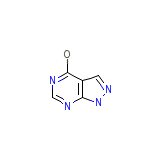
Apulonga


Apulonga Brand names, Apulonga Analogs
- 7HP
- Adenock
- Ailural
- Allo-Puren
- Allopur
- Allopurinol Sodium
- Allopurinolum [Inn-Latin]
- Allozym
- Allural
- Aloprim
- Alopurinol [Inn-Spanish]
- Aloral
- Alositol
- Aluline
- Anoprolin
- Anzief
- Apo-Allopurinol
- Apulonga
- Apurin
- Apurol
- Atisuril
- Bleminol
- Bloxanth
- Caplenal
- Cellidrin
- Cosuric
- Dabrosin
- Dabroson
- Dura Al
- Embarin
- Epidropal
- Epuric
- Foligan
- Geapur
- Gichtex
- Gotax
- HPP
- Hamarin
- Hexanuret
- Ketanrift
- Ketobun-A
- Ledopur
- Lopurin
- Lysuron
- Milurit
- Miniplanor
- Monarch
- Nektrohan
- Progout
- Purinol
- Remid
- Riball
- Sigapurol
- Suspendol
- Takanarumin
- Urbol
- Uricemil
- Uriprim
- Uripurinol
- Uritas
- Urobenyl
- Urolit
- Urosin
- Urtias
- Urtias 100
- Xanturat
- Zyloprim
- Zyloric
Apulonga Brand Names Mixture
- No information avaliable
Apulonga Chemical_Formula
C5H4N4O
Apulonga RX_link
http://www.rxlist.com/cgi/generic/allopur.htm
Apulonga fda sheet
Apulonga msds (material safety sheet)
Apulonga Synthesis Reference
Robins, J. Am. Chem. So. 78, 784 (1956)
Apulonga Molecular Weight
136.112 g/mol
Apulonga Melting Point
350 oC
Apulonga H2O Solubility
569 mg/L
Apulonga State
Solid
Apulonga LogP
-0.177
Apulonga Dosage Forms
Tablet for oral administration (100mg, 200mg and 300mg); Injection
Apulonga Indication
For the treatment of hyperuricemia associated with primary or secondary gout.
Apulonga Pharmacology
Allopurinol, a structural analog of the natural purine base hypoxanthine, is used to prevent gout and renal calculi due to either uric acid or calcium oxalate and to treat uric acid nephropathy, hyperuricemia, and some solid tumors.
Apulonga Absorption
Approximately 90% absorbed from the gastrointestinal tract.
Apulonga side effects and Toxicity
LD50=214 mg/kg (in mice)
Apulonga Patient Information
Patients should be informed of the following:
- 1. They should be cautioned to discontinue allopurinol and to consult their physician immediately at the first sign of a skin rash, painful urination, blood in the urine, irritation of the eyes, or swelling of the lips or mouth.
- 2. They should be reminded to continue drug therapy prescribed for gouty attacks since optimal benefit of allopurinol may be delayed for two to six weeks.
- 3. They should be encouraged to increase fluid intake during therapy to prevent renal stones.
- 4. If a single dose of allopurinol is occasionally forgotten, there is no need to double the dose at the next scheduled time.
- 5. There may be certain risks associated with the concomitant use of allopurinol and dicumarol, sulfinpyrazone, mercaptopurine, azathioprine, ampicillin, amoxicillin and thiazide diuretics, and they should follow the instructions of their physician.
- 6. Due to the occasional occurrence of drowsiness, patients should take precautions when engaging in activities where alertness is mandatory.
- 7. Patients may wish to take allopurinol after meals to minimize gastric irritation.
Apulonga Organisms Affected
Humans and other mammals