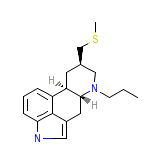
Pergolide Methanesulfonate


Pergolide Methanesulfonate Brand names, Pergolide Methanesulfonate Analogs
Pergolide Methanesulfonate Brand Names Mixture
- No information avaliable
Pergolide Methanesulfonate Chemical_Formula
C19H26N2S
Pergolide Methanesulfonate RX_link
http://www.rxlist.com/cgi/generic2/pergol.htm
Pergolide Methanesulfonate fda sheet
Pergolide Methanesulfonate msds (material safety sheet)
Pergolide Methanesulfonate Synthesis Reference
No information avaliable
Pergolide Methanesulfonate Molecular Weight
314.489 g/mol
Pergolide Methanesulfonate Melting Point
207.5 oC
Pergolide Methanesulfonate H2O Solubility
No information avaliable
Pergolide Methanesulfonate State
Solid
Pergolide Methanesulfonate LogP
4.02
Pergolide Methanesulfonate Dosage Forms
Tablet
Pergolide Methanesulfonate Indication
Indicated as adjunctive treatment to levodopa/carbidopa in the management of the signs and symptoms of Parkinson’s disease.
Pergolide Methanesulfonate Pharmacology
Pergolide is an ergot derivative dopamine receptor agonist at both D1 and D2 receptor sites. Pergolide is 10 to 1,000 times more potent than bromocriptine on a milligram per milligram basis in various in vitro and in vivo test systems. Pergolide mesylate inhibits the secretion of prolactin in humans; it causes a transient rise in serum concentrations of growth hormone and a decrease in serum concentrations of luteinizing hormone. In Parkinson’s disease, pergolide mesylate is believed to exert its therapeutic effect by directly stimulating postsynaptic dopamine receptors in the nigrostriatal system.
Pergolide Methanesulfonate Absorption
Significant amount may be absorbed (evidence on bioavailability still lacking).
Pergolide Methanesulfonate side effects and Toxicity
Oral, rat LD50: 15 mg/kg. Symptoms of overdose include nausea, vomiting, convulsions, decreased blood pressure, and CNS stimulation.
Pergolide Methanesulfonate Patient Information
Pergolide Methanesulfonate Organisms Affected
Humans and other mammals