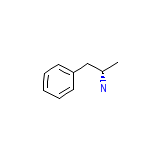
Amphetamine Sulfate


Amphetamine Sulfate Brand names, Amphetamine Sulfate Analogs
- (+/-)-Benzedrine
- (+/-)-Desoxynorephedrine
- (+/-)-beta-Phenylisopropylamine
- 1-Methyl-2-phenylethylamine
- 1-Phenyl-2-aminopropane
- 3-Methoxy-a-methylbenzeneethanamine
- 3-Methoxyamphetamine
- 3-Methoxyphenylisopropylamine
- Actedron
- Adipan
- Allodene
- Amphetamine (Narcotics)
- Amphetamine Sulfate
- Anorexide
- Anorexine
- Benzebar
- Benzedrine
- Benzolone
- DL-alpha-Methylphenethylamine
- Desoxyn
- Dexampex
- Dexedrine
- Dextroamphetamine Sulfate
- Dextrostat
- Elastonon
- Fenamin
- Fenylo-izopropylaminyl
- Ferndex
- Finam
- Isoamycin
- Isoamyne
- Isomyn
- Mecodrin
- Methampex
- Methamphetamine HCL
- Norephedrane
- Norephedrine, deoxy-
- Novydrine
- Oktedrin
- Ortedrine
- Paredrine
- Percomon
- Phenamine
- Phenedrine
- Phenylisopropylamine
- Profamina
- Propisamine
- Psychedrine
- Raphetamine
- Rhinalator
- Simpatedrin
- Simpatina
- Sympamin
- Sympamine
- Sympatedrine
- Weckamine
- [1-(3-Methoxyphenyl)-2-propyl]amine
- alpha-Methylbenzeneethaneamine
- amphetamine base
- beta-Aminopropylbenzene
- dl-1-Phenyl-2-aminopropane
- dl-Amphetamine
- dl-Benzedrine
- m-Methoxy-a-methylphenethylamine
- m-Methoxyamphetamine
- racemic-Desoxynor-ephedrine
Amphetamine Sulfate Brand Names Mixture
- Adderall (amphetamine + dextroamphetamine)
- Adderall XR 10mg (Amphetamine Aspartate + Amphetamine Sulfate + Dextroamphetamine Saccharate + Dextroamphetamine Sulfate)
- Adderall XR 15mg (Amphetamine Aspartate + Amphetamine Sulfate + Dextroamphetamine Saccharate + Dextroamphetamine Sulfate)
- Adderall XR 20mg (Amphetamine Aspartate + Amphetamine Sulfate + Dextroamphetamine Saccharate + Dextroamphetamine Sulfate)
- Adderall XR 25mg (Amphetamine Aspartate + Amphetamine Sulfate + Dextroamphetamine Saccharate + Dextroamphetamine Sulfate)
- Adderall XR 30mg (Amphetamine Aspartate + Amphetamine Sulfate + Dextroamphetamine Saccharate + Dextroamphetamine Sulfate)
- Adderall XR 5mg (Amphetamine Aspartate + Amphetamine Sulfate + Dextroamphetamine Saccharate + Dextroamphetamine Sulfate)
Amphetamine Sulfate Chemical_Formula
C9H13N
Amphetamine Sulfate RX_link
http://www.rxlist.com/cgi/generic3/adderallxr.htm
Amphetamine Sulfate fda sheet
Amphetamine Sulfate msds (material safety sheet)
Amphetamine Sulfate Synthesis Reference
U. S. Pat. 1,879,003, (1932)
Amphetamine Sulfate Molecular Weight
135.206 g/mol
Amphetamine Sulfate Melting Point
Volatizes slowly at room temperature
Amphetamine Sulfate H2O Solubility
Slightly
Amphetamine Sulfate State
Solid
Amphetamine Sulfate LogP
1.799
Amphetamine Sulfate Dosage Forms
Capsules
Amphetamine Sulfate Indication
For treatment of Attention Deficit Disorder with Hyperactivity (ADDH) and narcolepsy in children.
Amphetamine Sulfate Pharmacology
Amphetamine and dextroamphetamine, non-catechloamine sypathomimetic agents, are used in combination to treat attention-deficit hyperactivity disorder (ADHD) or narcolepsy. Adderall consists of equivalent amounts of amphetamine aspartate, amphetamine sulfate, dextroamphetamine saccharate, and dextroamphetamine sulfate.
Amphetamine Sulfate Absorption
It forms easily absorbed molecules that are highly lipid soluble
Amphetamine Sulfate side effects and Toxicity
LD50=180 mg/kg(s.c in rat). The most common presenting symptoms seen are agitation, hallucinations, suicidal behaviour, and chest pain.
Amphetamine Sulfate Patient Information
Amphetamines may impair the ability of the patient to engage in potentially hazardous activities such as operating machinery or vehicles; the patient should therefore be cautioned accordingly.
Amphetamine Sulfate Organisms Affected
Humans and other mammals