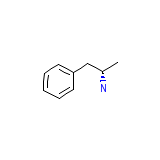
3-Methoxyamphetamine


3-Methoxyamphetamine Brand names, 3-Methoxyamphetamine Analogs
- (+/-)-Benzedrine
- (+/-)-Desoxynorephedrine
- (+/-)-beta-Phenylisopropylamine
- 1-Methyl-2-phenylethylamine
- 1-Phenyl-2-aminopropane
- 3-Methoxy-a-methylbenzeneethanamine
- 3-Methoxyamphetamine
- 3-Methoxyphenylisopropylamine
- Actedron
- Adipan
- Allodene
- Amphetamine (Narcotics)
- Amphetamine Sulfate
- Anorexide
- Anorexine
- Benzebar
- Benzedrine
- Benzolone
- DL-alpha-Methylphenethylamine
- Desoxyn
- Dexampex
- Dexedrine
- Dextroamphetamine Sulfate
- Dextrostat
- Elastonon
- Fenamin
- Fenylo-izopropylaminyl
- Ferndex
- Finam
- Isoamycin
- Isoamyne
- Isomyn
- Mecodrin
- Methampex
- Methamphetamine HCL
- Norephedrane
- Norephedrine, deoxy-
- Novydrine
- Oktedrin
- Ortedrine
- Paredrine
- Percomon
- Phenamine
- Phenedrine
- Phenylisopropylamine
- Profamina
- Propisamine
- Psychedrine
- Raphetamine
- Rhinalator
- Simpatedrin
- Simpatina
- Sympamin
- Sympamine
- Sympatedrine
- Weckamine
- [1-(3-Methoxyphenyl)-2-propyl]amine
- alpha-Methylbenzeneethaneamine
- amphetamine base
- beta-Aminopropylbenzene
- dl-1-Phenyl-2-aminopropane
- dl-Amphetamine
- dl-Benzedrine
- m-Methoxy-a-methylphenethylamine
- m-Methoxyamphetamine
- racemic-Desoxynor-ephedrine
3-Methoxyamphetamine Brand Names Mixture
- Adderall (amphetamine + dextroamphetamine)
- Adderall XR 10mg (Amphetamine Aspartate + Amphetamine Sulfate + Dextroamphetamine Saccharate + Dextroamphetamine Sulfate)
- Adderall XR 15mg (Amphetamine Aspartate + Amphetamine Sulfate + Dextroamphetamine Saccharate + Dextroamphetamine Sulfate)
- Adderall XR 20mg (Amphetamine Aspartate + Amphetamine Sulfate + Dextroamphetamine Saccharate + Dextroamphetamine Sulfate)
- Adderall XR 25mg (Amphetamine Aspartate + Amphetamine Sulfate + Dextroamphetamine Saccharate + Dextroamphetamine Sulfate)
- Adderall XR 30mg (Amphetamine Aspartate + Amphetamine Sulfate + Dextroamphetamine Saccharate + Dextroamphetamine Sulfate)
- Adderall XR 5mg (Amphetamine Aspartate + Amphetamine Sulfate + Dextroamphetamine Saccharate + Dextroamphetamine Sulfate)
3-Methoxyamphetamine Chemical_Formula
C9H13N
3-Methoxyamphetamine RX_link
http://www.rxlist.com/cgi/generic3/adderallxr.htm
3-Methoxyamphetamine fda sheet
3-Methoxyamphetamine msds (material safety sheet)
3-Methoxyamphetamine Synthesis Reference
U. S. Pat. 1,879,003, (1932)
3-Methoxyamphetamine Molecular Weight
135.206 g/mol
3-Methoxyamphetamine Melting Point
Volatizes slowly at room temperature
3-Methoxyamphetamine H2O Solubility
Slightly
3-Methoxyamphetamine State
Solid
3-Methoxyamphetamine LogP
1.799
3-Methoxyamphetamine Dosage Forms
Capsules
3-Methoxyamphetamine Indication
For treatment of Attention Deficit Disorder with Hyperactivity (ADDH) and narcolepsy in children.
3-Methoxyamphetamine Pharmacology
Amphetamine and dextroamphetamine, non-catechloamine sypathomimetic agents, are used in combination to treat attention-deficit hyperactivity disorder (ADHD) or narcolepsy. Adderall consists of equivalent amounts of amphetamine aspartate, amphetamine sulfate, dextroamphetamine saccharate, and dextroamphetamine sulfate.
3-Methoxyamphetamine Absorption
It forms easily absorbed molecules that are highly lipid soluble
3-Methoxyamphetamine side effects and Toxicity
LD50=180 mg/kg(s.c in rat). The most common presenting symptoms seen are agitation, hallucinations, suicidal behaviour, and chest pain.
3-Methoxyamphetamine Patient Information
Amphetamines may impair the ability of the patient to engage in potentially hazardous activities such as operating machinery or vehicles; the patient should therefore be cautioned accordingly.
3-Methoxyamphetamine Organisms Affected
Humans and other mammals