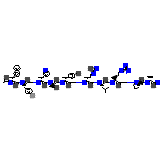
Hexadecylpyridinium chloride monohydrate


Hexadecylpyridinium chloride monohydrate Brand names, Hexadecylpyridinium chloride monohydrate Analogs
Hexadecylpyridinium chloride monohydrate Brand Names Mixture
- No information avaliable
Hexadecylpyridinium chloride monohydrate Chemical_Formula
No information avaliable
Hexadecylpyridinium chloride monohydrate RX_link
http://www.rxlist.com/cgi/generic2/cetrorelix.htm
Hexadecylpyridinium chloride monohydrate fda sheet
Hexadecylpyridinium chloride monohydrate msds (material safety sheet)
Hexadecylpyridinium chloride monohydrate Synthesis Reference
No information avaliable
Hexadecylpyridinium chloride monohydrate Molecular Weight
1431.06 g/mol
Hexadecylpyridinium chloride monohydrate Melting Point
No information avaliable
Hexadecylpyridinium chloride monohydrate H2O Solubility
No information avaliable
Hexadecylpyridinium chloride monohydrate State
Solid
Hexadecylpyridinium chloride monohydrate LogP
No information avaliable
Hexadecylpyridinium chloride monohydrate Dosage Forms
Powder for solution
Hexadecylpyridinium chloride monohydrate Indication
For the inhibition of premature LH surges in women undergoing controlled ovarian stimulation.
Hexadecylpyridinium chloride monohydrate Pharmacology
Cetrorelix is a synthetic decapeptide with gonadotropin-releasing hormone (GnRH) antagonistic activity. GnRH induces the production and release of luteinizing hormone (LH) and follicle stimulating hormone (FSH) from the gonadotrophic cells of the anterior pituitary. Due to a positive estradiol (E2) feedback at midcycle, GnRH liberation is enhanced resulting in an LH-surge. This LH-surge induces the ovulation of the dominant follicle, resumption of oocyte meiosis and subsequently luteinization as indicated by rising progesterone levels. Cetrorelix competes with natural GnRH for binding to membrane receptors on pituitary cells and thus controls the release of LH and FSH in a dose-dependent manner.
Hexadecylpyridinium chloride monohydrate Absorption
Rapidly absorbed following subcutaneous injection. The mean absolute bioavailability following subcutaneous administration to healthy female subjects is 85%.
Hexadecylpyridinium chloride monohydrate side effects and Toxicity
No information avaliable
Hexadecylpyridinium chloride monohydrate Patient Information
Hexadecylpyridinium chloride monohydrate Organisms Affected
Humans and other mammals