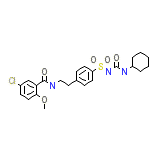
Glucoven


Glucoven Brand names, Glucoven Analogs
- Abbenclamide
- Adiab
- Apo-Glibenclamide
- Azuglucon
- Bastiverit
- Benclamin
- Betanase
- Betanese 5
- Calabren
- Cytagon
- Daonil
- Debtan
- Dia-basan
- Diabeta
- Diabeta (TN)
- Diabiphage
- Dibelet
- Duraglucon
- Euclamin
- Euglucan
- Euglucon
- Euglucon 5
- Euglykon
- GBN 5
- Gen-Glybe
- Gewaglucon
- Gilemal
- Glamide
- Glibadone
- Gliban
- Gliben
- Gliben-Puren N
- Glibenbeta
- Glibenclamid AL
- Glibenclamid Basics
- Glibenclamid Fabra
- Glibenclamid Genericon
- Glibenclamid Heumann
- Glibenclamid Riker M.
- Glibenclamid-Cophar
- Glibenclamid-Ratiopharm
- Glibenclamida [INN-Spanish]
- Glibenclamide
- Glibenclamide (JP14)
- Glibenclamidum [INN-Latin]
- Glibenil
- Glibens
- Glibesyn
- Glibet
- Glibetic
- Glibil
- Gliboral
- Glicem
- Glidiabet
- Glimel
- Glimide
- Glimidstata
- Glisulin
- Glitisol
- Glubate
- Gluben
- Gluco-Tablimen
- Glucobene
- Glucohexal
- Glucolon
- Glucomid
- Glucoremed
- Glucoven
- Glyben
- Glybenclamide
- Glybenzcyclamide
- Glyburide (USP)
- Glyburide (micronized)
- Glyburide [USAN]
- Glycolande
- Glycomin
- Glynase
- Hemi-Daonil
- Hexaglucon
- Humedia
- Lederglib
- Libanil
- Lisaglucon
- Malix
- Maninil
- Med-Glionil
- Melix
- Micronase
- Micronase (TN)
- Miglucan
- Nadib
- Neogluconin
- Norglicem 5
- Normoglucon
- Novo-Glyburide
- Orabetic
- Pira
- Praeciglucon
- PresTab
- Prodiabet
- Renabetic
- Semi-Euglucon
- Semi-Gliben-Puren N
- Semi-daonil
- Sugril
- Suraben
- Tiabet
- Yuglucon
Glucoven Brand Names Mixture
- No information avaliable
Glucoven Chemical_Formula
C23H28ClN3O5S
Glucoven RX_link
http://www.rxlist.com/cgi/generic/glybur.htm
Glucoven fda sheet
Glucoven msds (material safety sheet)
Glucoven Synthesis Reference
Weber et al., U.S. Pat. 3,454,635 (1969)
Glucoven Molecular Weight
494.004 g/mol
Glucoven Melting Point
169-170oC
Glucoven H2O Solubility
4 mg/L
Glucoven State
Solid
Glucoven LogP
4.85
Glucoven Dosage Forms
Tablet (1.25 mg, 2.5 mg, 5 mg)
Glucoven Indication
Indicated as an adjunct to diet to lower the blood glucose in patients with non-insulin-dependent diabetes mellitus (Type II) whose hyperglycemia cannot be satisfactorily controlled by diet alone.
Glucoven Pharmacology
Glyburide, a second-generation sulfonylurea antidiabetic agent, appears to lower the blood glucose acutely by stimulating the release of insulin from the pancreas, an effect dependent upon functioning beta cells in the pancreatic islets. With chronic administration in Type II diabetic patients, the blood glucose lowering effect persists despite a gradual decline in the insulin secretory response to the drug. Extrapancreatic effects may be involved in the mechanism of action of oral sulfonyl-urea hypoglycemic drugs. The combination of glyburide and metformin may have a synergistic effect, since both agents act to improve glucose tolerance by different but complementary mechanisms. In addition to its blood glucose lowering actions, glyburide produces a mild diuresis by enhancement of renal free water clearance. Glyburide is twice as potent as the related second-generation agent glipizide.
Glucoven Absorption
Significant absorption within 1 hour and peak plasma levels are reached within 4 hours.
Glucoven side effects and Toxicity
Oral rat LD50: > 20,000 mg/kg. Oral mouse LD50: 3250 mg/kg.
Glucoven Patient Information
Patients should be informed of the potential risks and advantages of MICRONASE and of alternative modes of therapy. They also should be informed about the importance of adherence to dietary instructions, of a regular exercise program, and of regular testing of urine and/or blood glucose.
The risks of hypoglycemia, its symptoms and treatment, and conditions that predispose to its development should be explained to patients and responsible family members. Primary and secondary failure also should be explained.
Glucoven Organisms Affected
Humans and other mammals