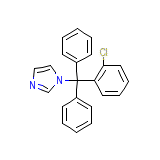
Clotrimaderm Cream


Clotrimaderm Cream Brand names, Clotrimaderm Cream Analogs
- Canesten
- Canesten 1-Day Cream Combi-Pak
- Canesten 1-Day Therapy
- Canesten 3-Day Therapy
- Canesten 6-Day Therapy
- Canesten Combi-Pak 1-Day Therapy
- Canesten Combi-Pak 3-Day Therapy
- Canesten Cream
- Canesten Solution
- Canestine
- Canifug
- Chlotrimazole
- Cimetidine
- Cimetidine (Type A)
- Cimetidine (Type AB)
- Cimitidine
- Clotrimaderm
- Clotrimaderm Cream
- Clotrimazol
- Clotrimazole ZnSO4 complex
- Clotrimazole (USAN)
- Crystalline Clotrimazole
- Empecid
- FemCare
- Gyne lotrimin
- Gyne-Lotrimin 3
- Gyne-Lotrimin 3 Combination Pack
- Gyne-Lotrimin Combination Pack
- Gyne-lotrimin
- Gynix
- Lotrimin
- Lotrimin AF Cream
- Lotrimin AF Cream (OTC)
- Lotrimin AF Jock-Itch Cream
- Lotrimin AF Lotion
- Lotrimin AF Lotion (OTC)
- Lotrimin AF Solution
- Lotrimin AF Solution (OTC)
- Lotrimin Af
- Lotrimin Cream
- Lotrimin Cream (Rx)
- Lotrimin Lotion
- Lotrimin Lotion (Rx)
- Lotrimin Solution
- Lotrimin Solution (Rx)
- Mono-baycuten
- Mycelax
- Mycelex
- Mycelex 7
- Mycelex Cream
- Mycelex Cream (OTC)
- Mycelex G
- Mycelex OTC
- Mycelex Solution
- Mycelex Solution (OTC)
- Mycelex Troches
- Mycelex Twin Pack
- Mycelex-7
- Mycelex-7 Combination Pack
- Mycelex-G
- Myclo Cream
- Myclo Solution
- Myclo Spray Solution
- Myclo-Gyne
- Mycosporin
- Mykosporin
- Neo-Zol Cream
- Trimysten
- Trivagizole 3
- Veltrim
Clotrimaderm Cream Brand Names Mixture
- Lotrisone (clotrimazole + betamethasone)
Clotrimaderm Cream Chemical_Formula
C22H17ClN2
Clotrimaderm Cream RX_link
http://www.rxlist.com/cgi/generic2/clotrimaz.htm
Clotrimaderm Cream fda sheet
Clotrimaderm Cream msds (material safety sheet)
Clotrimaderm Cream Synthesis Reference
K. H. Buechel et al.; U.S. Pat. 4,705,172(1972)
Clotrimaderm Cream Molecular Weight
344.837 g/mol
Clotrimaderm Cream Melting Point
147-149 oC
Clotrimaderm Cream H2O Solubility
29.84 mg/mL
Clotrimaderm Cream State
Solid
Clotrimaderm Cream LogP
5.98
Clotrimaderm Cream Dosage Forms
Cream; Liquid; Solution; Suppository; Ointment; Lozenge
Clotrimaderm Cream Indication
For the local treatment of oropharyngeal candidiasis and vaginal yeast infections, also used in fungal infections of the skin such as ringworm, athlete's foot, and jock itch.
Clotrimaderm Cream Pharmacology
Clotrimazole, an imidazole derivative with a broad spectrum of antimycotic activity, inhibits biosynthesis of the sterol ergostol, an important component of fungal cell membranes. Its action leads to increased membrane permeability and apparent disruption of enzyme systems bound to the membrane. Betamethasone and clotrimazole are used together to treat cutaneous tinea infections. In studies in fungal cultures, the minimum fungicidal concentration of clotrimazole caused leakage of intracellular phosphorous compounds into the ambient medium with concomitant breakdown of cellular nucleic acids, and accelerated potassium etflux. Both of these events began rapidly and extensively after addition of the drug to the cultures. The primary action of clotrimazole is against dividing and growing organisms.
Clotrimaderm Cream Absorption
Poorly and erratically absorbed orally, minimal vaginal or topical absorption.
Clotrimaderm Cream side effects and Toxicity
Symptoms of overdose include erythema, stinging, blistering, peeling, edema, pruritus, urticaria, burning, and general irritation of the skin, and cramps.
Clotrimaderm Cream Patient Information
How to use Clotrimazole :Use clotrimazole exactly as directed by your doctor. Always
read the manufacturer's information leaflet, if possible, before beginning treatment.
Clotrimazole preparations are usually applied two to three times a day until the
infection has cleared. This medicine is for you. Never give it to others, even if
their condition appears to be the same as yours. Getting the most from your
treatment : Always wash and dry your hands thoroughly before and after handling
clotrimazole. Do not allow clotrimazole to come into contact with the eyes, ears,
or mucous membranes (eg. mouth, vagina, inside of nose etc.), unless you are advised
to do so by your doctor. Complete the full course of treatment with clotrimazole,
otherwise your infection is likely to recur. Before using any 'over-the-counter'
medicines, check with your pharmacist which medicines are safe for you to use alongside
clotrimazole. You should see an improvement in your condition after a few days.
If your condition does not seem to be getting better after seven days, consult your
doctor for advice.
read the manufacturer's information leaflet, if possible, before beginning treatment.
Clotrimazole preparations are usually applied two to three times a day until the
infection has cleared. This medicine is for you. Never give it to others, even if
their condition appears to be the same as yours. Getting the most from your
treatment : Always wash and dry your hands thoroughly before and after handling
clotrimazole. Do not allow clotrimazole to come into contact with the eyes, ears,
or mucous membranes (eg. mouth, vagina, inside of nose etc.), unless you are advised
to do so by your doctor. Complete the full course of treatment with clotrimazole,
otherwise your infection is likely to recur. Before using any 'over-the-counter'
medicines, check with your pharmacist which medicines are safe for you to use alongside
clotrimazole. You should see an improvement in your condition after a few days.
If your condition does not seem to be getting better after seven days, consult your
doctor for advice.
Clotrimaderm Cream Organisms Affected
Yeast and other fungi