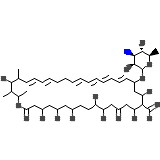
Barstatin 100


Barstatin 100 Brand names, Barstatin 100 Analogs
Barstatin 100 Brand Names Mixture
- No information avaliable
Barstatin 100 Chemical_Formula
C47H75NO17
Barstatin 100 RX_link
http://www.rxlist.com/cgi/generic2/nystat.htm
Barstatin 100 fda sheet
Barstatin 100 msds (material safety sheet)
Barstatin 100 Synthesis Reference
No information avaliable
Barstatin 100 Molecular Weight
926.09 g/mol
Barstatin 100 Melting Point
160oC
Barstatin 100 H2O Solubility
360 mg/L
Barstatin 100 State
Solid
Barstatin 100 LogP
-0.534
Barstatin 100 Dosage Forms
Cream; Drops; Liquid; Ointment; Suspension; Tablet
Barstatin 100 Indication
For treatment of cutaneous or mucocutaneous mycotic infections caused by Candida species
Barstatin 100 Pharmacology
Nystatin is an antibiotic which is both fungistatic and fungicidal in vitro against a wide variety of yeasts and yeast-like fungi, including Candida albicans, C. parapsilosis, C. tropicalis, C. guilliermondi, C. pseudotropicalis, C. krusei, Torulopsis glabrata, Tricophyton rubrum, T. mentagrophytes. Nystatin acts by binding to sterols in the cell membrane of susceptible species resulting in a change in membrane permeability and the subsequent leakage of intracellular components. On repeated subculturing with increasing levels of nystatin, Candida albicans does not develop resistance to nystatin. Generally, resistance to nystatin does not develop during therapy. However, other species of Candida (C. tropicalis, C. guilliermondi, C. krusei, and C. stellatoides) become quite resistant on treatment with nystatin and simultaneously become cross resistant to amphotericin as well. This resistance is lost when the antibiotic is removed. Nystatin exhibits no appreciable activity against bacteria, protozoa, or viruses.
Barstatin 100 Absorption
Nystatin is not absorbed from intact skin or mucous membrane
Barstatin 100 side effects and Toxicity
No information avaliable
Barstatin 100 Patient Information
No information avaliable
Barstatin 100 Organisms Affected
Fungi