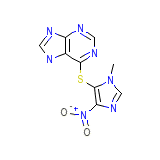
Azothioprine


Azothioprine Brand names, Azothioprine Analogs
Azothioprine Brand Names Mixture
- No information avaliable
Azothioprine Chemical_Formula
C9H7N7O2S
Azothioprine RX_link
http://www.rxlist.com/cgi/generic/azathioprine.htm
Azothioprine fda sheet
Azothioprine msds (material safety sheet)
Azothioprine Synthesis Reference
No information avaliable
Azothioprine Molecular Weight
277.264 g/mol
Azothioprine Melting Point
243.5 oC
Azothioprine H2O Solubility
272 mg/L
Azothioprine State
Solid
Azothioprine LogP
1.001
Azothioprine Dosage Forms
Powder for solution and tablets for oral administration (25 mg, 75 mg and 100 mg)
Azothioprine Indication
For use as an adjunct in the prevention of rejection in renal homotransplantation. Also for the management of severe, active rheumatoid arthritis unresponsive to rest, aspirin or other nonsteroidal anti-inflammatory drugs, or to agents in the class of which gold is an example.
Azothioprine Pharmacology
Azathioprine is a chemotherapy drug, now rarely used for chemotherapy but more for immunosuppression in organ transplantation and autoimmune disease such as rheumatoid arthritis or inflammatory bowel disease or Crohn's disease. It is a pro-drug, converted in the body to the active metabolite 6-mercaptopurine. Azathioprine acts to inhibit purine synthesis necessary for the proliferation of cells, especially leukocytes and lymphocytes. It is a safe and effective drug used alone in certain autoimmune diseases, or in combination with other immunosuppressants in organ transplantation. Its most severe side effect is bone marrow suppression, and it should not be given in conjunction with purine analogues such as allopurinol. The enzyme thiopurine S-methyltransferase (TPMT) deactivates 6-mercaptopurine. Genetic polymorphisms of TPMT can lead to excessive drug toxicity, thus assay of serum TPMT may be useful to prevent this complication.
Azothioprine Absorption
Well absorbed following oral administration.
Azothioprine side effects and Toxicity
The oral LD50 for single doses of azathioprine in mice and rats are 2500 mg/kg and 400 mg/kg, respectively. Very large doses of this antimetabolite may lead to marrow hypoplasia, bleeding, infection, and death.
Azothioprine Patient Information
Azothioprine Organisms Affected
Humans and other mammals