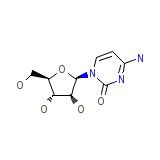
Arabinocytidine


Arabinocytidine Brand names, Arabinocytidine Analogs
- AR3
- Alexan
- Ara-C
- AraC
- Arabinocytidine
- Arabinofuranosylcytosine
- Arabinosylcytosine
- Arabitin
- Aracytidine
- Aracytin
- Aracytine
- Arafcyt
- Beta-cytosine arabinoside
- Citarabina [INN-Spanish]
- Cytarabin
- Cytarabina
- Cytarabine (JP14/USP)
- Cytarabine [USAN:BAN:INN:JAN]
- Cytarabine(USAN)
- Cytarabinoside
- Cytarabinum [INN-Latin]
- Cytarbel
- Cytosar
- Cytosar-U
- Cytosine 1-beta-D-arabinofuranoside
- Cytosine arabinofuranoside
- Cytosine arabinose
- Cytosine arabinoside
- Cytosine arabinoside (VAN)
- Cytosine beta-D-arabinoside
- Cytosine, 1-beta-D-arabinosyl-
- Cytosine, beta-D-arabinoside
- Cytosine-1-beta-D-arabinofuranoside
- Cytosine-beta-D-arabinofuranoside
- Cytosine-beta-arabinoside
- Depocyt
- Depocyt (TN)
- Depocyt (liposomal)
- Erpalfa
- Iretin
- Spongocytidine
- Tarabine
- Udicil
- beta-Arabinosylcytosine
- beta-D-Arabinosylcytosine
Arabinocytidine Brand Names Mixture
- No information avaliable
Arabinocytidine Chemical_Formula
C9H13N3O5
Arabinocytidine RX_link
http://www.rxlist.com/cgi/generic3/cytarabine.htm
Arabinocytidine fda sheet
Arabinocytidine msds (material safety sheet)
Arabinocytidine Synthesis Reference
Krenitski, et al; Carbohydr.Res.; 97, 139-146(1981)
Arabinocytidine Molecular Weight
243.217 g/mol
Arabinocytidine Melting Point
212-213oC
Arabinocytidine H2O Solubility
Freely soluble
Arabinocytidine State
Solid
Arabinocytidine LogP
-2.712
Arabinocytidine Dosage Forms
Injectable solution
Arabinocytidine Indication
For the treatment of acute non-lymphocytic leukemia, acute lymphocytic leukemia and blast phase of chronic myelocytic leukemia.
Arabinocytidine Pharmacology
Cytarabine is an antineoplastic anti-metabolite used in the treatment of several forms of leukemia including acute myelogenous leukemia and meningeal leukemia. Anti-metabolites masquerade as purine or pyrimidine - which become the building blocks of DNA. They prevent these substances becoming incorporated in to DNA during the "S" phase (of the cell cycle), stopping normal development and division. Cytarabine is metabolized intracellularly into its active triphosphate form (cytosine arabinoside triphosphate). This metabolite then damages DNA by multiple mechanisms, including the inhibition of alpha-DNA polymerase, inhibition of DNA repair through an effect on beta-DNA polymerase, and incorporation into DNA. The latter mechanism is probably the most important. Cytotoxicity is highly specific for the S phase of the cell cycle.
Arabinocytidine Absorption
Less than 20% of the orally administered dose is absorbed from the gastrointestinal tract.
Arabinocytidine side effects and Toxicity
Cytarabine syndrome may develop - it is characterized by fever, myalgia, bone pain, occasionally chest pain, maculopapular rash, conjunctivitis, and malaise.
Arabinocytidine Patient Information
This medicine is a type of chemotherapy for treating cancers of the
blood and certain other cancers. This medicine interfers with the
way cancer cells grow, Take your doses on a regular scheduled time
and DO NOT take this medicine more often than directed by your health
care provider. Finish the full course prescribed by your health care
provider. DO NOT stop taking this medicine unless diredted to do so
by your health care provider. While taking this medicine, you make
get infection more easily. Call your doctor if you get a fever, chills,
or sore throat. Drink plenty of water with this medicine.
blood and certain other cancers. This medicine interfers with the
way cancer cells grow, Take your doses on a regular scheduled time
and DO NOT take this medicine more often than directed by your health
care provider. Finish the full course prescribed by your health care
provider. DO NOT stop taking this medicine unless diredted to do so
by your health care provider. While taking this medicine, you make
get infection more easily. Call your doctor if you get a fever, chills,
or sore throat. Drink plenty of water with this medicine.
Arabinocytidine Organisms Affected
Humans and other mammals