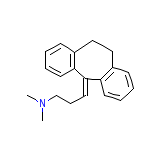
Amitryptyline


Amitryptyline Brand names, Amitryptyline Analogs
- Adepress
- Adepril
- Amitid
- Amitril
- Amitriprolidine
- Amitriptylin
- Amitriptyline HCL
- Amitriptyline Hydrochloride
- Amitryptiline
- Amitryptyline
- Amytriptiline
- Damilan
- Damilen
- Damitriptyline
- Elanil
- Elavil
- Endep
- Flavyl
- Hexathane
- Horizon
- Lantron
- Laroxil
- Laroxyl
- Lentizol
- Proheptadiene
- Redomex
- Saroten
- Sarotex
- Seroten
- Sylvemid
- Triptanol
- Triptilin
- Triptisol
- Tryptanol
- Tryptizol
Amitryptyline Brand Names Mixture
- Apo Peram Tab 2-25 (Amitriptyline Hydrochloride + Perphenazine)
- Apo Peram Tab 3-15 (Amitriptyline Hydrochloride + Perphenazine)
- Elavil Plus Tab (Amitriptyline Hydrochloride + Perphenazine)
- Etrafon 2 10 (Amitriptyline Hydrochloride + Perphenazine)
- Etrafon a Tab (Amitriptyline Hydrochloride + Perphenazine)
- Etrafon D Tab (Amitriptyline Hydrochloride + Perphenazine)
- Etrafon F Tab (Amitriptyline Hydrochloride + Perphenazine)
- Pms-Levazine 2/25 Tab (Amitriptyline Hydrochloride + Perphenazine)
- Pms-Levazine 3/15 Tab (Amitriptyline Hydrochloride + Perphenazine)
- Pms-Levazine 4/25 Tab (Amitriptyline Hydrochloride + Perphenazine)
- Proavil Tab (Amitriptyline Hydrochloride + Perphenazine)
- Triavil Tab (Amitriptyline Hydrochloride + Perphenazine)
Amitryptyline Chemical_Formula
C20H23N
Amitryptyline RX_link
http://www.rxlist.com/cgi/generic/amitrip.htm
Amitryptyline fda sheet
Amitryptyline msds (material safety sheet)
Amitryptyline Synthesis Reference
Hoffsommer et al., J. Org. Chem. 27, 4134 (1962)
Amitryptyline Molecular Weight
277.403 g/mol
Amitryptyline Melting Point
196-197 oC
Amitryptyline H2O Solubility
9.7 mg/mL
Amitryptyline State
Solid
Amitryptyline LogP
4.612
Amitryptyline Dosage Forms
Syrup; Tablet (10 mg, 25 mg, 50 mg, 75 mg, 100 mg, and 150 mg)
Amitryptyline Indication
For the treatment of anxiety, bipolar disorders, and depression.
Amitryptyline Pharmacology
Amitriptyline, a tertiary amine tricyclic antidepressant, is structurally related to both the skeletal muscle relaxant cyclobenzaprine and the thioxanthene antipsychotics such as thiothixene. It is extremely sedating, and thus improvement of sleep patterns can be the first benefit of treatment. Amitriptyline exhibits strong anticholinergic activity, cardiovascular effects including orthostatic hypotension, changes in heart rhythm and conduction, and a lowering of the seizure threshold. As with other antidepressants, several weeks of therapy may be required in order to realize the full clinical benefit of amitriptyline. Although not a labelled indication, amitriptyline is widely used in the management of chronic nonmalignant pain (e.g., post-herpetic neuralgia, fibromyalgia).
Amitryptyline Absorption
Rapidly and well absorbed following oral administration (bioavailability is 30-60% due to first pass metabolism).
Amitryptyline side effects and Toxicity
LD50=350 mg/kg (in mice). Symptoms of overdose include abnormally low blood pressure, confusion, convulsions, dilated pupils and other eye problems, disturbed concentration, drowsiness, hallucinations, impaired heart function, rapid or irregular heartbeat, reduced body temperature, stupor, and unresponsiveness or coma.
Amitryptyline Patient Information
While on therapy with amitriptyline HCl, patients should be advised as to the possible impairment of mental and/or physical abilities required for performance of hazardous tasks, such as operating machinery or driving a motor vehicle.
Amitryptyline Organisms Affected
Humans and other mammals